Failing dental implants · Peri-implantitis

Something wrong with an implant? The earlier we see it, the more we can save.

Bleeding, swelling, a bad taste, bone loss on an x-ray, or an implant that feels loose. These are signs of peri-implantitis, the disease that destroys the bone around an implant. It does not fix itself, but caught early it is very treatable. We see failing implants from across Eastern Washington, wherever they were placed.

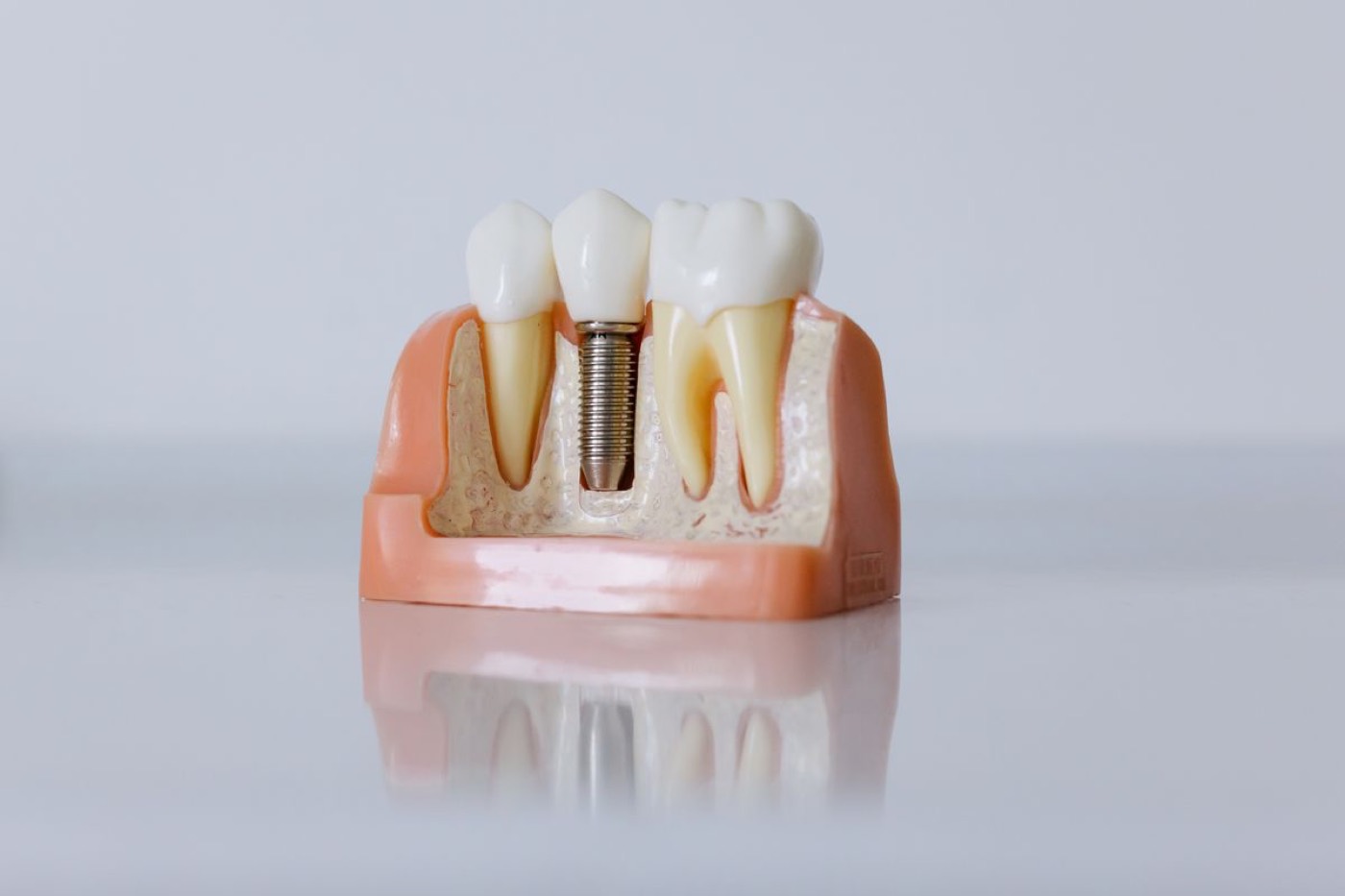
A cutaway model showing a dental implant placed in the jawbone beside natural teeth

What peri-implantitis is

An implant has no ligament and no natural defence around it the way a tooth does. When bacteria get established under the gum beside it, the bone starts to melt away, often without pain. First the gum bleeds or swells. Then the x-ray shows a cup of lost bone around the top of the implant. Left alone, the implant eventually loosens and is lost, and the bone it took with it makes a replacement harder.

The point that matters: early peri-implantitis is usually treatable. Late peri-implantitis usually is not. The difference is often a matter of months.

What we most often find

When a patient comes to us with an implant placed elsewhere, three things account for most of what we see:

  • Bone loss that has gone too far to repair. The implant was left too long before anyone looked properly.
  • Infection in the neighbouring teeth. Gum disease around the natural teeth seeds the implant. Treating the implant alone does not work if the teeth beside it are still infected.
  • A loose implant. Once an implant moves, it cannot be saved. It has to come out.

Can a failing implant be saved?

Often, yes, if the implant is still firm. Depending on how much bone has been lost:

  • LAPIP. The laser protocol we use for gum disease, adapted for implants. The laser removes infected tissue and bacteria from around the implant without cutting the gum open, and lets the tissue reattach. Least invasive, and often enough for early disease.
  • Regenerative treatment. For deeper bone loss we open the area, clean the implant surface thoroughly, and rebuild with a bone graft and, where needed, a gum graft so the implant has healthy tissue around it again.
  • Removal and replacement. The last resort, when the implant is loose or the bone cannot be rebuilt around it. We remove it, rebuild the bone, and place a new implant once the site has healed. We plan this on a 3D scan so the second implant does not repeat the problems of the first.

Who wrote the rules on this? One of our own doctors. Dr. Saleh was a lead author of the American Academy of Periodontology and Academy of Osseointegration guidelines on preventing and treating peri-implant disease.

What to do if you think your implant is failing

  1. Do not wait for it to hurt. Peri-implantitis is usually painless until it is advanced.
  2. Call us. Tell the front desk it is a failing implant; we work these in quickly.
  3. Bring any x-rays or records you have from wherever the implant was placed. It helps, but we will take our own 3D scan either way.

You do not need a referral, and it does not matter who placed the implant. We see this from all three of our offices.

For referring dentists

If you see bleeding, suppuration or radiographic bone loss around an implant, the single most useful thing you can do is remove the crown, place a cover screw or healing abutment, and send the patient to us straight away. Taking the restoration off takes the load off the implant and gives us access; sending promptly is what decides whether the implant is saveable. We report back after the consultation and the restorative relationship stays with you. Details on the referring doctors page.

In his words

Dennis came to us with a failing implant. LAPIP saved it.

Dennis is a real patient of Dr. Alkanan and gave permission to share his story. Whether an implant can be saved depends on your own scan and exam.

Two periodontists. One plan.

Complex cases get two specialist opinions before anything is decided.

Board certification is the highest credential in periodontics, and both of our doctors hold it. Complex cases here are reviewed by both: the surgeon who will do the work, and the specialist who helped write the research it rests on. A second opinion is built in, with no extra step for you.

Dr. Abdullah Alkanan

Dr. Abdullah Alkanan

Diplomate, American Board of Periodontology · Faculty, PNWU School of Dental Medicine

Founder of the practice. Trained in the UK and the United States, teaches periodontics at the dental school in Yakima and lectures internationally. Conservative planning, honest advice, and no corners cut.

Read his full bio
Dr. Muhammad Saleh

Dr. Muhammad Saleh

Diplomate, American Board of Periodontology · Clinical Assistant Professor, University of Michigan

More than 140 published papers and a lead author of the national guidelines on disease around implants. Other surgeons travel to learn implant surgery from him. Calm, thorough, and clear about what he is doing and why.

Read his full bio

When your dentist wants a specialist involved, this is where they send you.

Cost & financing

What it costs, and how people pay for it.

We can't put a real number on a webpage, because the honest answer depends on what your exam and 3D scan show. What we can promise is that you'll get a written treatment plan with an exact figure on it before you commit to anything. No surprises added later.

Most patients have some insurance coverage, and we'll check yours and tell you what it will and won't pay. For the balance, we work with three financing companies so you can spread the cost over time — many patients qualify for plans with no interest if paid within the promotional period.

  • CareCredit
  • Proceed Finance
  • LendingClub

Ask us at your consultation and we'll walk you through the options and the monthly numbers.

Insurance & financing in detail

Ready to talk it through?

Call any of our three offices, or send us a request and we'll get back to you. Phone hours are Monday to Friday, 7am to 3pm.