
Sleep through it, and remember none of it.
If fear is the reason you've been putting off treatment, you are in very good company. We offer two levels of comfort: IV sedation, provided in-house by Dr. Alkanan, and full general anesthesia with a nurse anesthetist for longer surgery.
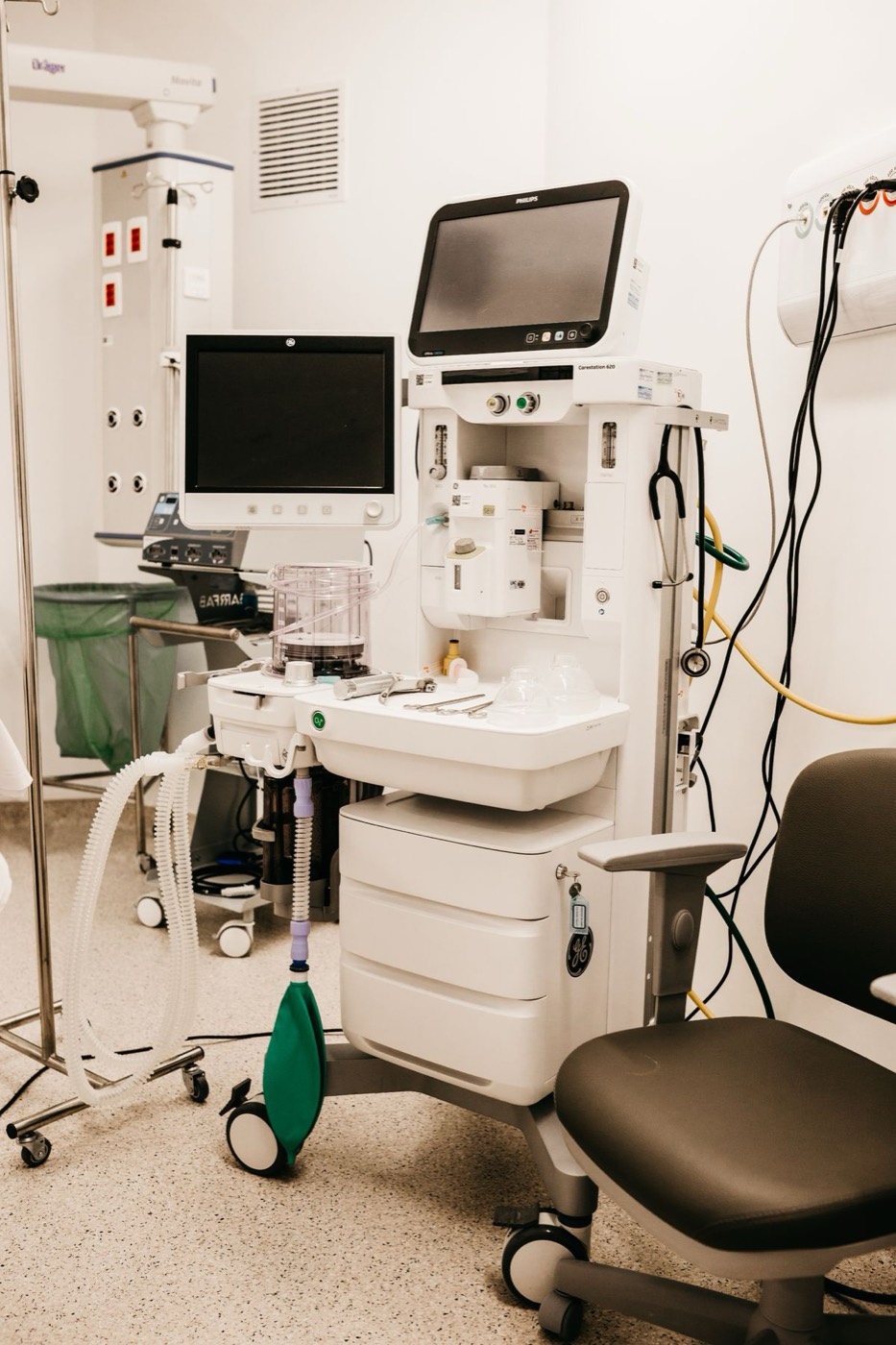
What IV sedation is
Sedative medication is given through a small line in your arm or hand. It works within about a minute, and because it goes straight into the bloodstream we can adjust the depth of sedation moment to moment, rather than giving you a pill and hoping we've guessed the dose right.
You are not under general anesthetic. Technically you remain conscious and able to respond if we speak to you. But you're deeply relaxed, you have no anxiety, and the medication has a strong amnesic effect — so the near-universal experience is of arriving, and then of it being finished.
Patients regularly ask us afterward when we're going to start. That's the effect we're after.
How it compares
- Local anesthetic alone — numb, fully aware. Fine for most straightforward treatment.
- Oral sedation — a tablet beforehand. Takes the edge off, but the dose can't be adjusted once you've taken it, and the effect varies a lot between people.
- IV sedation — adjustable, reliable, and you won't remember it. The right choice for long appointments and for genuine dental fear.
Is fear what's been stopping you?
If so, you are the reason this page exists. Dr. Alkanan on why dental anxiety is so common, and why it doesn't have to decide what treatment you get.
2 min 38 sec · More in our patient education videos.
The two options we offer
IV sedation — provided in-house
Dr. Alkanan is trained and permitted to provide IV sedation himself, in our own offices. That means no separate facility, no separate appointment, and no third party to coordinate with. It covers the great majority of what we do, including single and multiple implants, grafting and gum surgery.
General anesthesia — with a nurse anesthetist
For longer or more complex surgery — All-on-X being the usual example — we can arrange full general anesthesia, where you are completely asleep rather than deeply relaxed.
For those cases a certified registered nurse anesthetist (CRNA) comes to our office. A CRNA is an advanced practice nurse who specialises in anesthesia and does nothing else during your procedure but manage your airway, your medication and your vital signs. Dr. Alkanan operates; the CRNA looks after you.
It still happens here, in a room you've already seen, rather than in a hospital. And because someone whose only job is your anesthesia is present throughout, it's the option we prefer for four-to-six hour surgery.
General anesthesia has to be scheduled around the CRNA's availability, so tell us early if it's what you want — it affects which day we can book you.
Is it safe?
Yes, for appropriately screened patients — and screening you properly is part of the job. We review your medical history, current medications, and any previous experience with anesthesia before we agree to sedate you.
Dr. Alkanan's specialist residency included formal training in anesthesia and sedation, which is a normal part of periodontal training and the reason this can be done in our own offices rather than in a hospital. Throughout the procedure you are continuously monitored — heart rate, blood pressure, and blood oxygen — and the medications we use can be reversed immediately if that were ever needed.
Some conditions mean we'd want a physician's input first, or would recommend a hospital setting instead. Severe sleep apnoea, significant heart or lung disease, and some pregnancies fall into that category. We'll tell you honestly if you're better off somewhere else.
How long does it take?
The sedation itself lasts as long as your procedure needs — anything from 45 minutes to the four-to-six hours of a full-arch case.
Afterward you'll rest with us for around 20 to 30 minutes until you're steady on your feet. Most of the grogginess is gone within a few hours, though the medication takes a full 24 hours to clear.
How to prepare
- Nothing to eat or drink for 6 hours beforehand — small sips of water with essential medication are usually fine, and we'll confirm.
- Arrange a driver. This is not negotiable. Someone must drive you home and stay with you for a few hours. You cannot drive yourself, and you cannot take a taxi or rideshare alone.
- Bring a list of your medications, including anything over-the-counter or herbal.
- Wear short sleeves and flat shoes. Leave jewellery at home.
- Tell us if anything changes — a cold, a new prescription, a hospital visit. It matters more than you'd think.
The rest of the day
Plan on doing nothing. No driving, no work, no important decisions or documents, no alcohol, and no looking after small children on your own for 24 hours.
Most people go home, sleep for a few hours, and feel like themselves by the evening. You'll have written aftercare instructions for whatever procedure you had, and a number to call if anything worries you.
Who it's a good option for
- Anyone whose dental fear has kept them away from treatment they need
- People with a strong gag reflex
- Anyone facing a long appointment — All-on-X, multiple implants, or extensive grafting
- Patients who struggle to get properly numb with local anesthetic alone
- Anyone who finds it difficult to sit still or keep their mouth open for long
- People with a bad past experience at the dentist that hasn't left them
If you're in that first category, please say it plainly when you call. It is the most common thing we hear, nobody here finds it unusual, and it changes how we plan your first visit.
What it costs, and how people pay for it.
We can't put a real number on a webpage, because the honest answer depends on what your exam and 3D scan show. What we can promise is that you'll get a written treatment plan with an exact figure on it before you commit to anything. No surprises added later.
Most patients have some insurance coverage, and we'll check yours and tell you what it will and won't pay. For the balance, we work with three financing companies so you can spread the cost over time — many patients qualify for plans with no interest if paid within the promotional period.



Ask us at your consultation and we'll walk you through the options and the monthly numbers.
Procedures we commonly sedate for
Ready to talk it through?
Call any of our three offices, or send us a request and we'll get back to you. Phone hours are Monday to Friday, 7am to 3pm.